Teacher in the Mirror
  • Reflection
  • Tips for Parents

Criticism Turned Compliment

3/15/2015

1 Comment

 
Picture
"Oh, you have Mrs. H.!" I heard a familiar voice exclaim, just outside my door.

As usual, I had butterflies before the big "Student Walk-Through Day" which takes place a few days before the school year begins.  Meeting my students is important to me, and it makes the first day of school much less intimidating (for all parties involved). When I recognized that voice in the hallway as one of my beloved students from the year before, I hurried towards the door to greet that familiar face in the sea of strangers.  I could feel my butterflies disappearing already, but before I made it around the corner, the conversation continued down a much more awkward path.

"How do you say her name?" questioned the new student's parent.  

I headed through the doorway to introduce myself just as my beloved former student's mom spoke.  When she saw me, she said, "Oh, this is Mrs. Hinrichsen.  Your child is going to LOVE her."  

She was too kind... Well, that sentence was kind.  

She went on to explain, "She is a FUN teacher.  Your child will do all kinds of fun and cutesy things this year.  He [pointing to her child] just loved her, but if you want your child to LEARN, you'll wish she had _________."  

What?  I was standing RIGHT THERE! 

See, my goal is for my students to learn, first and foremost.  Those words cut through me like a knife.  One part of my brain was thinking of all kinds of sassy things I could say.  My heart rate tripled, but then the professional side of my brain took over (thank goodness).  I smiled and said, "Oh yes, __________ is a wonderful teacher.  It is so nice to meet you!  Welcome to 3rd grade."  

As I showed the new student around the room, I avoided anything "fun" as much as I could.  I kept my mini-tour basic, and within a few minutes she had heard all of the essentials.  Her eyes appeared to have glossed over, and my butterflies were back in full strength.  She didn't have one question about the classroom.  It was as if she had already lost interest in school, but it hadn't even started yet.

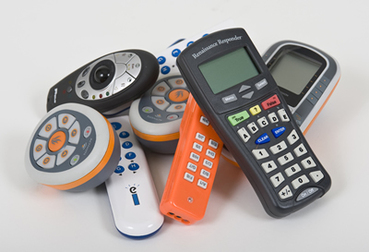
I decided quickly that it would be okay to show her just one "fun" thing to get her excited about the year.  She smiled from ear to ear when she learned that she would be using an ActivExpression/Clicker "device" for lessons.  She asked if she could try it out, and then she told a quick story about how it reminded her of the remote control at her grandma's house.  Then she went on to tell about the two weeks she spent with her grandmother that summer.  As I listened to her talk, I noticed that she had a few issues with her grammar.  "Her has a remote that looks like this," was one of the first things she said.  

Oh, she was so excited that I had to show her just one more thing.  The bus tent was a curiosity, so she led us in that direction.  I explained that students earn money in order to buy a "bus ticket" for a day.  That led to more conversation, and based on her spoken grammar alone, I could tell we would have a lot of work to do together.  However, as our conversation shifted to the classroom bank, I realized that she was a bit of a math wizard.  She asked how she could earn money in the classroom, and soon figured out how many nickels it would take to earn a bus ticket ($1.00).  I let her in on a little secret, "On 2-hour delay days, the tickets go on sale for 50% off."  

"That means they is only 50 cents!" she called out as her eyes lit up.

It was at that moment when her mom announced she was ready to go.   

My new, bright-eyed student gave me a quick hug before she went on her way; my mind was left racing with ideas about how to make her have a successful year.  

The school year began, and I assigned her to be the banker for the first week of classroom jobs.  The first writing prompt was about grandparents, and she enjoyed revising and editing hers so her grandma would like it.

When I asked her how she liked school after the first few days, she said, "It was so fun!"   Oh no...

Well, I guess it WAS fun.  I even enjoyed it.  Why did I think "fun" was such a bad word to hear?  Was that parent right?  Was I the "fun" teacher in a classroom of non-learners?  

I realized that the comment I once regarded as harsh criticism was actually a compliment.  At least, I would take it that way.

See, I want students to have fun.  They are kids.   But my underlying goal is for students to learn.  When my students have fun learning, they ask questions, put forth more effort, and care about learning.

It is easy to give a written test, to copy a worksheet, and to follow a manual to the letter.  Those things are only my tools. I use them, but I also use what I learn about the human beings with whom I interact.  I make every effort to personalize learning experiences (even in a subtle way) to make learning meaningful.  If meaningful is "fun" for a child, then I will admit to being a "fun" teacher.  Just because I am "fun" doesn't exclude me from being effective.  

Data drives instruction, but not all meaningful data comes from a standardized test.  I talk to my students, too.  Personalized learning opportunities are strategically placed in "fun" places for students IN ADDITION TO typical day-to-day lessons from the curriculum.  It takes extra thinking and planning to make things personal and meaningful.  

What Did You Do in School Today?

When parents ask their children what they did in school, a common answer is, "Nothing!"  

They could say, 

"I did a really awesome worksheet."
"I copied definitions."
"I did the same thing I did yesterday but with different math problems."

Most likely they won't.  They will talk about something that stood out as interesting. Just remember, inside that "fun" story is a deliberately hidden, valuable lesson.  Just don't tell the class.

Now that I think of it, that "fun teacher" criticism was actually one of the biggest compliments I could have gotten.  

1 Comment

Whac-a-mole Teaching: Why I Create a Team of Learners

3/5/2015

0 Comments

 
Picture
Picture
Who doesn't love the challenge and adrenaline boost of a good old-fashioned game of Whac-a-mole?  I admit it.  I've played the game "a few" times over the years.  It always starts out easy, allowing me to stay on top those pesky little moles.  Gradually, they pick up speed, and there aways comes a point in the game when I either stay focused and continue at an adrenaline-boosting pace, or I completely lose focus and fail miserably.  Eventually, everyone loses (well at least I always do).  It's impossible for one person to get them ALL at the same time!

Realization: My Job is One Big Game of Whac-a-mole!

When my lessons take place in the computer lab, the Whac-a-mole likeness is quite obvious to me.  

Everything starts out smoothly.  Only a few students need help at first, and I can usually predict who they will be.

As the students become more involved in their individual projects, the hands start going up more frequently.  This is when it is the most fun for me (for real).  There's an adrenaline rush, but I still feel very much in control.  As they continue to work, students try new things, take risks (which I encourage), and occasionally get stuck along the way.  At this point in the game, I learn the most about my students.  I see common mistakes they make, but I also get to know the individuals.  I even gain a lot of perspective about work habits, priorities, and interests.  While I am "in the zone," I get a good picture of what my students are capable of doing independently.

After a while, the hands start to pop up at a more rapid pace.  I look around and notice that several students are waiting for me.  My heart starts pounding...  But then I realize that some of those students are simply signaling that they are finished.  I only need to approve their work, but doing that also requires more of my focus.  At this point, I realize that I'm NOT going to be able to keep up with everyone's needs.  Luckily for me, I'm the boss of this game. In my version, students are allowed to join my team to help others learn.  


Creating and Managing the Team

As students finish their independent work, they may join the team or work  independently on something else.  Most of my students love to help.

When a student has a question, I send a capable team member over to assist.  Once the team member is in position, they naturally check in with those other students seeking help.  I am amazed by how much my students can figure out together.  As more team members are in play, I am able to approve or assess the finished projects that those team members have left open for me.  

If there is a common problem students make, I quickly train a few "specialists" to help me.  For example, some students may forget how to add pictures to the project.  Those students in need of picture-assistance use a special hand signal when they need help, and those "specialists" go to work helping.  That frees me up so that I can continue to answer more difficult or unique questions.

My team members know from the beginning that helping others does not mean doing things FOR them.  For the most part, they have to be "hands off" with their help.  The process of explaining how to do something proves to be challenging, even for my most competent team members.  It is an invaluable experience.

Don't Make the Starters Play the Whole Game

Everyone is good at something!

There comes a time when I bench my original team members and allow others to join in.  Eventually everyone has the opportunity to "play the game" and help out.

I do this because:
  • Early finishers often need to go back to their projects and make adjustments;
  • They may have learned something from someone they helped, so they go back to modify their own project; 
  • I want students to know they can take their time and still get a chance to help others;
  • Original team members deserve time to pursue their interests with other projects or activities;
  • A student doesn't need to know everything to be able to help;
  • Everyone needs to have an opportunity to lead and feel important.

If someone does not have time to help during the class time, they can always lend a hand at the end. There is always something to be done, even something as simple as making sure everyone logged out of the computers.  

At the end most class periods, I feel so proud of my students.  Most importantly, I think they are proud of themselves and each other.  

We get so much accomplished by working together.  


0 Comments

Take Off the Training Wheels: Go Beyond the Worksheet

3/3/2015

0 Comments

 
Picture
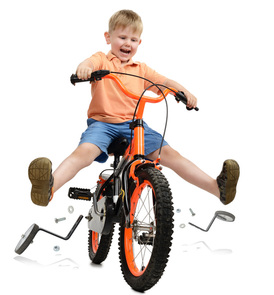
Have your students ever seemed disconnected from grammar or writing lessons?  Mine certainly have, so I had to make a change.  I decided it was time to take off the training wheels.  

The Problem - Training Wheels

Well, I was frustrated.  My students aced their weekly "common assessments" each week, but as soon as the next week's lesson began, that "old" knowledge disappeared.  I could tell in the daily writing.    

While instruction consisted of more than worksheets, I needed to expose the students to at least one worksheet.  After all, the format matched that of the tests.  [Yes, teaching to the tests, I guess.  But students need to be taught how to read and follow directions or they'll be tricked on the "big" tests.]

Well... Using the worksheets is deceiving, really.  

See, if the class did really well on the worksheet(s), I would cut that lesson time a little short to spend extra time on other more difficult concepts in language arts.  I had the peace of mind knowing my students were going to do well on the test.  Students would be happy, parents would be happy (with the grade), but my students weren't learning. They were fooled; I was fooled.  

There it was. They learned (and were tested on) writing and grammar skills with their training wheels on.  That was the problem.  We never took them off.

Independent Writers - Training Wheels Off

Is it easier to teach a child to ride a bike if he wants to take off his training wheels, or if he is happier just riding around with them on?

My first efforts to create more independent writers failed.  I was surprised by how reluctant my writers were.  I simply asked them to write their very own sentences to apply a skill.  This took forever, and some students complained of "not knowing what to write."  The few students that did write quality sentences shared their work in small groups, but language arts was over, and there was very little practice time applying the skill.  At least with the worksheet, students had more practice, and they had something to take home.  But wait, that's right.  That didn't really help them learn to be independent writers (which is our true end goal).

Finally, I got an idea.  It came after a reading lesson where we discussed the character traits of Clementine in great detail.  Students found text evidence to demonstrate those traits.  They really saw how the writer developed the character of Clementine.  

Before the next language arts lesson (on dialogue and quotation marks), I had each student create a character.  It could be anyone.  Each character was sketched, named, and described with many character traits.  I explained that we were not writing a story about the character.  It was only going to be a friend to them to help them practice writing. 

I was AMAZED at how quickly students did this, and at how creative the characters were.  That took no more than 5 minutes.  I made up a character while they did, and I used her for the example to show quotation marks in dialogue.  The students cracked up at my character traits, and they couldn't wait to make up sentences for what my character would say.  I wrote down the dialogue some of them suggested.  It was hysterical.  Of course, we talked about where to put the quotation marks, but then it was their turn.  They had to write one sentence.  

In less than 5 minutes, many students had several sentences, and whoa, I was seeing mistakes!  We stopped.  I showed them all some examples of mistakes I had seen. We corrected them and tried again.  There were more mistakes.  We stopped, made corrections, and tried again.  

The lesson was self-differentiating.  More advanced students tended to create more difficult opportunities for using quotation marks.  They wrote more as a whole, and dared to veer from the examples' patterns.  Other students wrote one sentence, and I was able to use it as an opportunity to remind about capitals, punctuation, and spelling.  I did not read every sentence in every notebook; I just went around making corrections as much as I could.  It was surprising how many students raised their hands to have me double check if they were "on the right track."  THEY CARED! It was not uncommon to hear someone randomly blurt out laughing.  The dialogue from their off-the-wall characters was making them crack up. 

They were writing solo, and they were loving it!

At the end of class, some students begged me to allow them to take their notebooks home so their "characters could say more things."  I had to remind them that they were not allowed to write stories yet.  I told them it is like soccer practice.  You can't play a game until you practice.  I overheard one student whisper to another, "How will she know, especially if I write it on a separate sheet?" 

Those characters are going to help me teach writing and grammar from now on.  This will not be the last you hear about them!  

They only had to create their characters once, and we can use them for rest of the year!

Note: They still did the worksheet in 5 minutes, and they aced the test.  I am anxious to see if they remember how to use quotation marks in the future!

0 Comments

Secret Weapon

2/15/2015

0 Comments

 
Picture
Just after 9:00 in the morning, quiet cheers rang out, and students hurried to get the materials they needed for the lesson.  No, it was not time for science.  It was time for math!  What happened to make them so excited to begin?  I simply gave them one direction:

"Take out your devices.  We are going to have a little quiz before we begin math today."

Were they excited to take a quiz?  Yes, in a sense.

The main reason my students were so excited was because I said, "Take out your devices."  My students all have an Interactive Response Device.  We call them "devices" for short.  They are used to gather data from my students (in the form of little quiz questions), and I use the immediate feedback to drive my instruction throughout the lesson.  They love using the devices.  Here are some of the ways I use the devices to keep students engaged EVERYDAY.  

Expectations
As with any routine classroom procedure, my students know the expectations for using the devices.  They know I have the ability check to see exactly how they are voting.  This keeps students from just pressing any old answer. I also set a timer on the "vote" so students have to respond in a timely fashion.  They know they cannot get "points" if 100% of people do not vote within the specified time.  See below in "Team Work" for more information about the points.  They also know that these "quizzes" are not graded, so the stress level is kept to a minimum.

Team Work
My class works as a team to help each other understand the questions.  It is not unlikely to hear students asking each other for help, or to overhear a student explaining a good strategy to his/her group.  This part of my math lesson plays an integral role in the daily instruction.  Just listening to the dialogue between students allows me to understand so much about where they are in the learning process.  What does this have to do with the devices?  For every question where 100% of my students get the right answer, the class (as a whole) earns points towards a classroom reward.  
There are times when 90% get the right answer.  Students beg me to give them another try.  I do, only if a student volunteers to explain what the 10% incorrect probably did wrong.  The computer never shows the class who answered incorrectly, but I say, "Listen carefully to [so-and-so] if you missed this!"  After a student passionately explains HOW and WHY the correct answer makes sense, there are usually a few more students ready to chime in with more tips.  I also use this as a time to remind students to use math vocabulary in their explanations, but oftentimes, students will beat me to it.  They REALLY work hard to make sure all students understand so they can get points!  On days when the class is especially engaged, I award extra class points!  

Step-by-Step Check
We use devices to answer questions throughout the entire lesson.  Not only do I see what students need to learn, but individuals realize it immediately if they are missing something.  It gives us all immediate feedback.

Each day begins with a review of old material.  Usually students have already completed the questions for morning work, so it is a quick review.  It is easy to see what needs clarification before moving on.  

Before the new lesson begins, I ask a few questions that will be used to check for understanding at the end of the lesson. I also pose them at the beginning to see where my instruction needs to begin.  Students respond with devices, and we keep track of which answers have the most votes. I do not tell the students what the correct answer is.  They know they will have those questions again at the end, and the right answers will be revealed then.

As the lesson progresses, I ask various questions.  My favorite type of question does not require students to complete a whole problem, but rather they are to answer a thinking question.   I may just ask something like, "Do we need to regroup?"  Throughout the lesson, I often ask many yes/no/? questions.  The ? allows for students to show they just do not understand without guessing.  I slow down or speed up depending on the immediate data.  As students show more understanding, I demand more independent work.  

If I get to a part of the lesson where about eight students are consistently missing answers, I give the whole class independent problems to work on as I privately check to see who the struggling students are.  As everyone works quietly, I walk around to check on those specific struggling students.  I do not make it obvious with overwhelming attention on them, but this really helps me with my instruction. 

At the end of the lesson, we go back to those questions from the beginning.  I give students the chance to clarify anything or give tips to the whole class.  Then the students vote on the answers again.  Oftentimes, 100% of students get the correct answer on at least one of them.  When we can, we take time to reflect on why they were able to get the correct answer at the end.  I say, "What did you learn that made the big difference?"  If a student does miss the final questions, sometimes he/she will come to me quietly and ask for a little more help, but if they do not, I can go to them.  I can always privately see how each individual voted, or answered.    

If we do not use the devices, my students are really disappointed (and so am I).  They feel like using them makes lessons more interactive and fun.  I know that using them makes me a more effective teacher, and the learning process is much more efficient.  The devices are... bah ha ha ha ha ha... my secret weapon!


0 Comments

Burn Out or Fan the Flame

1/28/2015

0 Comments

 
2004-2014... "Ten years of teaching have passed already?"  Or should I ask, "Only ten years of teaching have passed?"

Packing up the classroom for summer vacation of 2014 was confusing.  On one hand, I could hardly believe how fast ten years had flown by.  On the other hand, I felt a bit like a failure-- should I have done more in ten years?  My tenth year, in particular, was a difficult one.  It seemed like anything positive was disappearing in my memories, and only the negative ones were coming through.  My positive flame was burning out.  I needed fuel, and I needed it fast.  Was it gone?  I spent the summer thinking about what drove me to become a teacher.  I looked pretty far, but I found that fuel.

In 1987, I had the best kindergarten teacher in the world, Mrs. Eckenrode. In addition to academics, I learned how to be a "good person" in kindergarten.  There are no standards for that, but those lessons stuck with me forever.  In 1988, Mrs. Lander was the best first grade teacher.  She made everyone feel special, and she let you sit in her big rocking chair if you were brave enough to read to the class.  Mrs. Ransom was the best second grade teacher.  When she read, The Boxcar Children, her voices were right on point, and the whole class was whisked away on adventures when she read aloud to us.  She was so smart; I remember that she could spell O-l-y-m-p-i-c-s without even looking it up.  (My ambition up through second grade was to be an Olympic gymnast.)  In third grade, I met Mrs. Reed.  Her room was a town, complete with town meetings and a mayor.  We ran the classroom, so we thought.  It was a family, and Mrs. Reed facilitated everything perfectly.  The songs we sang every morning made me really excited to go to school.  We also earned money, had auctions, and memorized poems.  Most of all, I remember loving to read and write.  We talked about books we read, and I even read stories I wrote to the class.  That year I changed my ambition from Olympian to teacher.  I wanted to be a third. grade. teacher... just like Mrs. Reed! My love for the teaching profession did not stop at third grade.  Mr. Morgan had a couch in his room in 4th grade, and he made me LOVE science.  Early finishers could learn BASIC computer programming, and I will never forget the day I made the robot pick up an eraser!  I still remember every single teacher I have ever had, and each of them is a small part of THE TEACHER I WANT TO BE everyday.  

That is my fuel!

In 1990, I decided I wanted to be a third grade teacher, just like Mrs. Reed.  Believe it or not, I am a third grade teacher.  The disappointing part for me, is that I am not just. like. Mrs. Reed.  I know I cannot be JUST like her, but after ten years, you would think I would feel less of a failure.  I try really hard to be the teacher I always wanted to be (since 1990), but there is no way.  Times are different, and things have changed.  

Again, I was faced with a decision.  Was my fuel gone?  Have I burned out?  

Education has changed since the 1990's; there is no doubt about it.  I could write 100 pages of things that have changed (that need to change back).  To summarize those thoughts, I believe that, as much as political systems in education feel they have the best interest of students in mind, they do not.  As a teacher, I have no control of those things, and it is frustrating!  Just thinking about it makes it hard to breathe. Am I burned out, trying to be a teacher from the 90's in the 21st century?

I now realize that I am not burning out; I am suffocating. 

I still have a passion, and it is strong!  I REALLY WANT to give my students experiences that are equal to (or better than) the ones I had.  My teachers were (and still are) my fuel, and I want to be that for my students.  To do this, I need to step back and breathe.  All the obstacles are sure to be around for a while, but I will take my focus away from those suffocating challenges to make a real difference in my students' lives.  While a day of third grade in my classroom will not be identical to a day in my dear Mrs. Reed's room, it will be the best day I can possibly arrange for my students.  

Today I made a point to KNOW my students better-- to listen, to sing, to play, and to laugh.  We still "got through" everything in my lesson plans, but today was different.  It was memorable.  We took time to breathe.  

A fan to the flame was all I needed.  Tomorrow will be bright.
Picture
0 Comments

Make It Matter!

1/22/2015

0 Comments

 
 Vocabulary. Definitions. Examples. Sentences.  Does this sound exciting? 

 When the clock hits 2:15, my class comes to life.  It is time for science!  The students have their notebooks out and are ready to move to their science seats before I even finish explaining the upcoming experiment.  They hang on every single word I say.  How do I know they are listening?  There are no questions about what to do.  Not one.  The experiments are being executed perfectly.  Even my student with the shortest attention span is caught telling her lab partner EXACTLY how many drops of liquid need to be applied to make a chemical change visible! So why do they listen SO well in science class, but have such trouble remembering vocabulary from reading class after days and days of review?

 Science matters to them-- right now!  They are in charge of the science experiment's success, and they want to see results! They care!

 How do I get students to care about vocabulary in reading class? 

 I can think like an adult, and lecture students about how knowing more vocabulary will make them understand more about what they read in the future. I could also remind students that they will be better writers in the future if they understand more vocabulary. Those involve "the future" reasoning, and as a kid, that kind of reasoning just is not enough. 

 How do I make students understand the importance of vocabulary "right now" in their lives?  Grades! That's it. No.  While it is true that learning vocabulary will help grades, does it make the students want to REALLY LEARN the words?  My students do care about their grades.  They do their sentences, participate in class, and get excellent grades.  However, I can tell my students really do not care.  They figure out the system, use those test taking strategies (I taught them) and they ace their tests. Parents are happy, students have As, but I know they still just went through the motions. A few students write really nice sentences, and they seem to enjoy the process, but this is a small portion of the class population.  HOW CAN VOCABULARY COMPETE WITH CHEMICAL REACTIONS?

 PLAY!  We easily lose track of the fact that our students are KIDS!  Let's play a game!  Make students WANT to CARE.

 This morning, we played a game I made up called, "Draw, Sculpt, or Act!"  I need a better name, but this one includes directions in the name, so it works quite efficiently in my jam-packed days.  Students work in groups to get their teams to guess the most vocabulary terms in a given amount of time.  They can draw, sculpt with play-doh, or act out words charades-style. This gets students out of their seats.  If they use one strategy, and the team is not guessing, they are forced to get the point across in other ways.  This is far from regurgitating definitions and forcing words into lackluster sentences.

 During today's game, ALL students were engaged.  They quickly found out that if they had recently studied the words, it was easier to guess.  Students worked together.  If one student could not think of the word, but they knew what the person was trying to show, they would describe it.  For example, "Oh, that is a planet going around and around!  It is that little invisible thing that goes through the planet!"  Another team member heard this and was able to guess, "Axis!" The students all seemed to have a rush of adrenaline (fun).  The winning prize was small-- a simple sticker.  The winning team was proud, but other teams did not feel deflated.

 The most important part of the game came afterwards. We reflected on the words that were easier to guess versus the ones that were challenging.  They were fairly common across groups.  For the most challenging words, we brainstormed ideas to help people guess them better.  I told the students, "You will see these words again when we review, so remember these tips!"

 After the game, I gave students the vocabulary assessment.  Compared to other weeks, the students finished in about half the time!  It is hard to prove if the game gets all the credit.  It just seemed that students really knew the words, and took less time relying on test-taking strategies!  As a teacher, I prefer standardized-style assessments to take LESS of my class time. 

This could be good news for students:

 More Time Playing Games = Less Time Taking Tests

 Is it too good to be true?

Games do make it matter "right now" for students.  We just need to be sure that the games we choose:

  • Engage all students,
  • Challenge students to think,
  • Create opportunities for students to make connections,
  • Are as effective, or more effective, than another learning opportunities,
  • Allow for opportunities to reflect or "debrief" about the content,
  • "Trick" students into caring about that content,
  • Make it memorable-- make it matter.

When forced to think about whether or not we have "time" to play games in the classroom, we need to think about what will matter most to our students now.  It may even make their futures brighter!

 
We play a lot of games.  Jeopardy, math card games, and computer games are some of our favorites.  What are yours?

0 Comments

Feather in the Room

1/17/2015

0 Comments

 
  Yesterday we celebrated a student's birthday.  With that, comes the opportunity for the birthday student to dress up with items from our birthday box.  One of the items was a colorful feather boa.  Throughout the day, feathers kept falling out of that boa.  Each time a feather fell out, a student would stop to pick it up.  One student was even caught blowing a red feather around the room, completely lost in his own game.  Needless to say, the boa became quite a distraction, leading to its retirement from the box of birthday costumes.  This series of events caused me to step back and examine other possible "feathers in the room" that were keeping my students from being engaged in learning. 
   During this observation, I realized that I could probably make a boa from all of the distractions my students encounter in a day!  Typical distractions included physical items like erasers, pencil grips, retainers, and books that were just too exciting to put away.  What surprised me, were the distractions that were not so obvious.  I realized that while I was teaching, I was also creating distractions.  For example, while building up to the exciting part of a lesson, I told a student to turn her paper to the correct side.  I also reminded a student to put his glasses on, prompted a boy to put his book away, and asked if a student could wait to use the restroom.  While all of these side comments were brief and subtle, I realized that they were, indeed, distractions.  Each time the focus was taken off the lesson content, more students became disengaged.  In the future, I will not allow these minor distractions to get in the way of my lessons.  I will wait until there is a "break in the action" to address the issues of individual students. I am also going to make more effort to keep students engaged, even if it means rethinking an entire lesson.  While I cannot eliminate every distraction, I will do my best to keep the focus on what is important so that my students will learn more effectively.  What are the "feathers" in your classroom?
0 Comments

I'm Listening... and Thinking!

7/3/2014

1 Comment

 
I'm a good listener.  I always have been.  I'm sure my mom still has all of my elementary school report cards to prove it, too.  Kidding aside, listening and learning are very important to me.  I enjoying hearing what people have to say.  Believe it or not, some of my best insights and ideas come when I am listening to people complain!   This does not mean that I love negativity; I usually try to find the silver lining.   People just do not realize how valuable complaining can be in the problem solving process.  Passionate complainers sometimes have the best ideas hidden amongst all of that hot air and eye rolling.  Listening, finding value, and problem solving.... Next time you end up in the middle of that group of complainers, sit back and listen.  You might just get a great idea!
1 Comment
Forward>>

    Author

    Colleen Hinrichsen has been teaching since 2004.  She taught first grade, third grade, became a technology coach, and is now a STEAM teacher.  It is her goal to be as effective as possible, so self-reflection is a must-do.  She enjoys the challenge of balancing rigor with fun, and choosing resources to best meet the needs of diverse learners.

    Archives

    July 2019
    October 2017
    October 2016
    May 2016
    February 2016
    June 2015
    May 2015
    April 2015
    March 2015
    February 2015
    January 2015
    July 2014

    Categories

    All
    Authentic
    Coaching
    Collaborative
    Edtech
    ELA
    Engaged Learners
    Fun
    Games
    Green Screen
    Interactive
    IPad
    Personalized
    Problem Solving
    QR Codes
    Social Studies
    Teacher Leader
    Tech Management
    Technology
    Video
    Vocabulary

    RSS Feed

Proudly powered by Weebly